Art and Design Alumna Maya Davis (‘24) follows her curatorial dreams to New York City
Mentored by Assistant Professor Gillian Sneed, Davis is now part of the competitive joint fellowship at the Studio Museum in Harlem and the New York MoMA
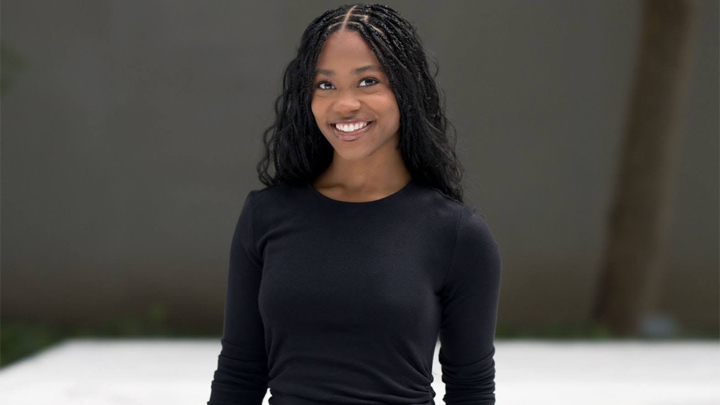
When 9-year-old Maya Davis from Fayetteville, AR, first visited Crystal Bridges Museum of American Art, she knew from that moment on the career that was meant for her.
Davis has been chasing that dream ever since, fueled by her passion for appreciating art and wanting to give others that same sense of appreciation.
“I knew in some way I would be working in an art museum and that that was the type of work that felt aligned with me,” Davis said.
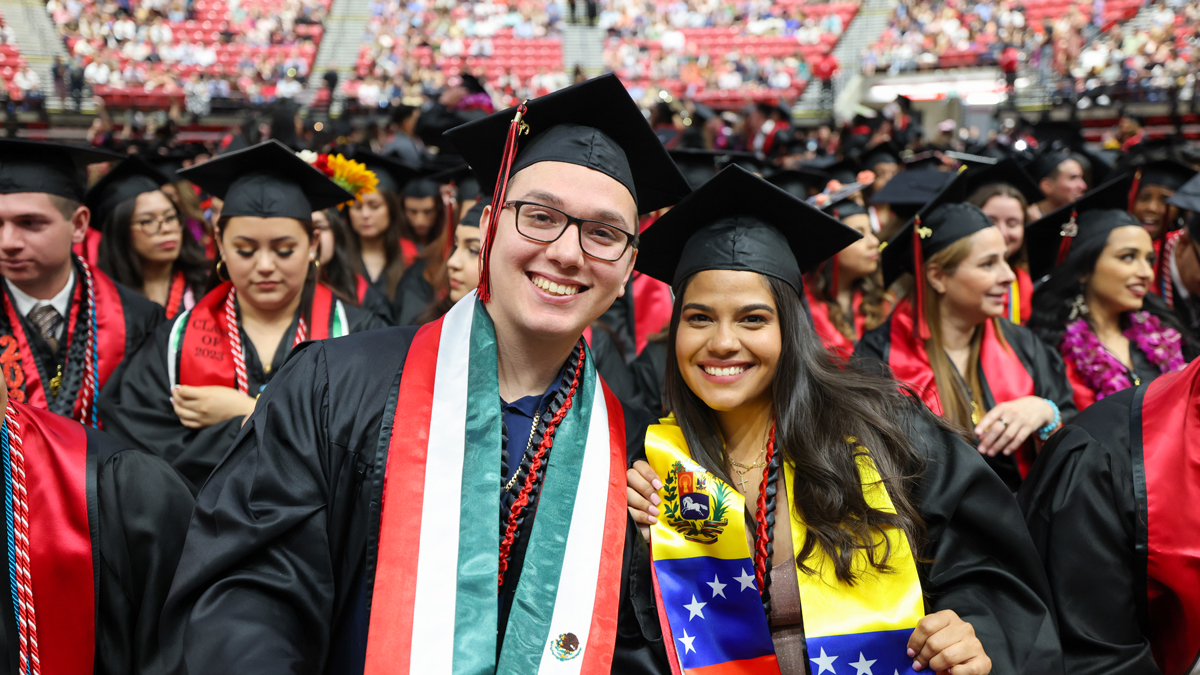
After graduating from San Diego State University’s School of Art and Design in 2024 with a Bachelor’s in art history, Davis began a competitive and prestigious joint fellowship program at the Studio Museum in Harlem and New York Museum of Modern Art.
“Maya is an exceptionally friendly, motivated, and intellectually inquisitive person whose enthusiasm for art history and curatorial practice is exceptional,” said Assistant Professor Gillian Sneed, Davis’ mentor at SDSU. “She brings a thoughtful, creative energy to every conversation, and her commitment to her professional goals is both consistent and impressive.”
Davis worked at Studio Museum in Harlem from Sept. 2024 to Sept. 2025 for the first year of the two-year fellowship program. She primarily focused on site-specific installations: art pieces intended specifically for a particular space that don’t travel elsewhere.
In Sept. 2025, she embarked on the second year of the fellowship at the New York Museum of Modern Art,and has been working on an exhibition for 2027 in the Department of Drawings and Prints with Curator Esther Adler.
Long before this milestone, Davis had already begun carving out her path in curatorial work, immersing herself in the field at a remarkably young age..
Around age 13 and then again at age 16, she was a part of the Early College Program at Spelman College in Atlanta, GA. Davis said she appreciated how the program celebrates diversity in curatorial work and future curators, as well as offering art history college courses for credit.
Davis has also held curatorial positions at Crystal Bridges Museum – where she first fell in love with art, Whitney Museum of American Art in New York, and Lorenzo de’Medici Institute Gallery in Italy.
These experiences solidified Davis’ commitment to art history and curatorial studies, a dream that followed her into adulthood, ignited by the inspiration she found at SDSU.
“The people that I made great relationships with in San Diego, including my professors at SDSU, really helped champion me and planted roots in canonical art history and different ways of thinking about art history,” Davis said.
Davis admired how her professors came from a diverse collection of places, especially as an out-of-state student herself, and said she felt immensely supported by them.
“I felt very comfortable being able to communicate my goals with [Professor Sneed], and being able to talk about my dreams of doing curatorial work in New York City,” Davis said. “She never made me feel as if I was lesser than, and she never made me feel as if it was unachievable. She helped push me, and even now, we’re still in contact and she helps me with other opportunities.”
“Working with Maya as her mentor was consistently rewarding,” Sneed said. “She approached both her coursework and her broader professional development with curiosity, focus, and a striking degree of creativity.”
One experience that Davis said she is most proud of is her research trips in Atlanta, GA and Stockholm, Sweden, where she analyzed women’s reproductive health through an institutional lens. Davis met with curators, artists, historians, and professionals, and her research was centered on encouraging the visualization of reproductive history.
“[In] a lot of my classes at SDSU, what I felt most drawn to – most seen in – was performance artists rethinking about the body, especially women's bodies,” Davis said.
Another highlight for Davis was working on Studio Museum in Harlem’s exhibition of emerging artists, also called the Artist-in-Residence program.
“I loved that project. I really think it helped narrow my curatorial interests to working with living artists and championing artists that aren’t as acclaimed currently,” Davis said.
Davis describes curatorial work as a “bridge between institution and audience,” a position that involves academic research, analyzing archives, and talking to many librarians and archivists.
“Education is such a major part of museum work,” Davis said.
“It’s supposed to create generative thinking, like ‘How can I translate what I just learned from this exhibition into my day-to-day life?’ she continued.
Davis said the goal of museums is to expose people to art that they can see themselves represented in or emotionally resonate with, letting people connect art to their own personal lives.
She hopes to continue fostering this connection throughout the rest of her career.
“Given her talent, work ethic, and clear sense of purpose, I have no doubt she will continue to thrive and make significant contributions to our discipline,” Sneed said.
Next Story

Daily Aztec: Yung Guero, the SDSU singer who uses his Mexican heritage to fuel his music
Yung Guero is an SDSU student who transferred from MiraCosta College in Oceanside, pursuing music through inspiration from his cultural background